Inside a Slot: Random Numbers, Weighted Reels and the Myth of the Due Machine
The reels are an animation. The result was decided the instant the button went down, by a number generator that has never heard of your session.
· 9 min read
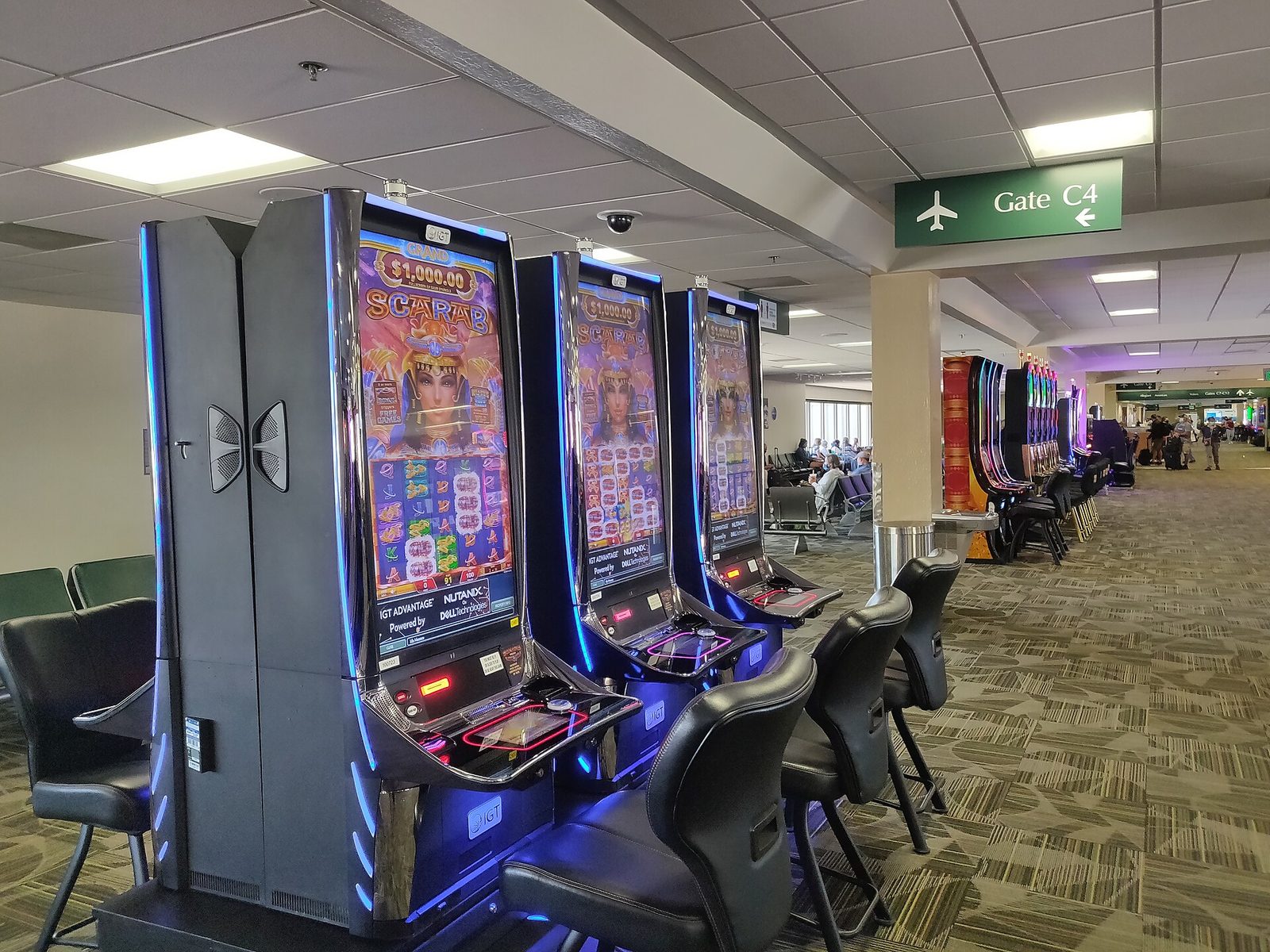
The most important thing about a slot machine is that the spinning is theatre. The result is chosen the instant you press the button, by a random number generator that runs continuously whether anyone is playing or not. The reels then rotate for a second or two and stop in the positions the number already selected. Nothing that happens during the animation affects anything.
Once you know that, most of the folklore around slot floors collapses — because almost all of it depends on the machine being in some kind of state that a player could read or influence.
The generator, and what regulators demand of it
A random number generator produces values continuously, thousands per second. Pressing spin takes whatever value is current and maps it onto an outcome. Two players pressing a millisecond apart get different numbers; the same player pressing at a “better” moment gets a different number for no reason they can control.
In Great Britain the standard the generator must meet is published. RTS 7 requires results to be “acceptably random”, demonstrable to a high degree of confidence through statistical testing. The output must be uniformly distributed across its range; outcomes must match the theoretical probabilities; the sequence must not repeat or synchronise between instances; seeding must not introduce predictability. And one clause matters more than all the rest:
Adaptive behaviour (that is, a compensated game) is not permitted.
A compensated game is one that adjusts its odds according to what has already been paid out. In a licensed British game it is prohibited outright. The machine cannot tighten because it has paid a jackpot, cannot loosen because it has taken money all evening, and cannot notice you at all.
0 memory
The state a licensed slot may carry between spins about how much it has paid. Adaptive or “compensated” games are prohibited outright under RTS 7
Gambling Commission, RTS 7
Weighted reels: the trick that made modern slots possible
Here is where intuition goes wrong. Looking at a reel with twenty symbols, you might assume each has a one-in-twenty chance. On any machine built after the mid-1980s, it does not.
In 1984 the Norwegian mathematician Inge Telnaes was granted US Patent 4448419, an Electronic Gaming Device Utilizing a Random Number Generator for Selecting the Reel Stop Positions. The idea is to separate the physical reel from the probability space. The machine holds a much larger virtual reel — 256 stops is a common figure — and maps many virtual stops onto each physical symbol. A blank might occupy thirty virtual stops; the jackpot symbol might occupy one.
Three virtual reels of 256 stops give 256³ = 16,777,216 combinations, which is what makes a large jackpot payable on a small machine while keeping the house advantage where the manufacturer wants it. The patent itself is candid about the purpose: to make a machine “that is perceived to present greater chances of payoff than it actually has within the legal limitations”.
The PAR sheet, which you cannot see
Every machine has a Probability and Accounting Report — the full table of symbol weights, payout combinations and theoretical return. It is the design document, and it is confidential. Wikipedia notes that a single machine model will typically ship with eight to twelve different programs at different payouts, so even knowing the model tells you little about the specific cabinet in front of you.
For land-based machines this makes the return effectively unknowable to a player. Online is different: British rules require that the return to player, the house edge or the probability of winning be available before the customer commits to gamble, so an online slot’s headline RTP is published even when the weightings behind it are not.
What the payout floor actually is
| Jurisdiction | Legal minimum payout |
|---|---|
| Nevada | 75% |
| Mississippi | 80% |
| New Jersey | 83% |
Statutory minimums from the Wikipedia article on slot machines. These are floors, not typical values — competitive pressure means most machines are set well above them — but they are the legal limit of how tight a machine may be.
A 75% minimum is a 25% house edge. Nothing obliges an operator to go anywhere near it, and in a competitive market most do not: the Wizard of Odds puts the practical range of slot house edges at 2% to 15%. But the floor is the floor, and it is a very long way down.
The three beliefs that the design refutes
- “This machine is due.” Nothing accumulates between spins. A machine that has not paid in four hours has the same probability on the next spin as one that paid a jackpot thirty seconds ago.
- “That was my jackpot — the person after me took it.” The generator advances thousands of times a second. To land the same outcome you would have had to press within a fraction of a millisecond of when they did.
- “Stopping the reels early changes the result.” The result was set at the button press. In Britain the stop feature is not merely ineffective, it is prohibited: RTS 14E states the system “must not permit a customer to reduce the time until the result is presented”, and names turbo, quick spin and slam stop as examples.
What is left once the folklore goes
A slot machine is a fixed-price product whose price is stated as a return-to-player percentage, delivered in a highly variable pattern. There is no skill component, no exploitable state and no timing advantage — which also means there is no way to play one badly. The only decisions available are which game, what stake and how long, and of those three, stake and duration are the ones that determine what the evening costs.