Baccarat: Banker, Player, and the Bet Nobody Should Take
A game with three bets, no decisions, and a commission structure that makes the best of them look worse than it is.
· 8 min read
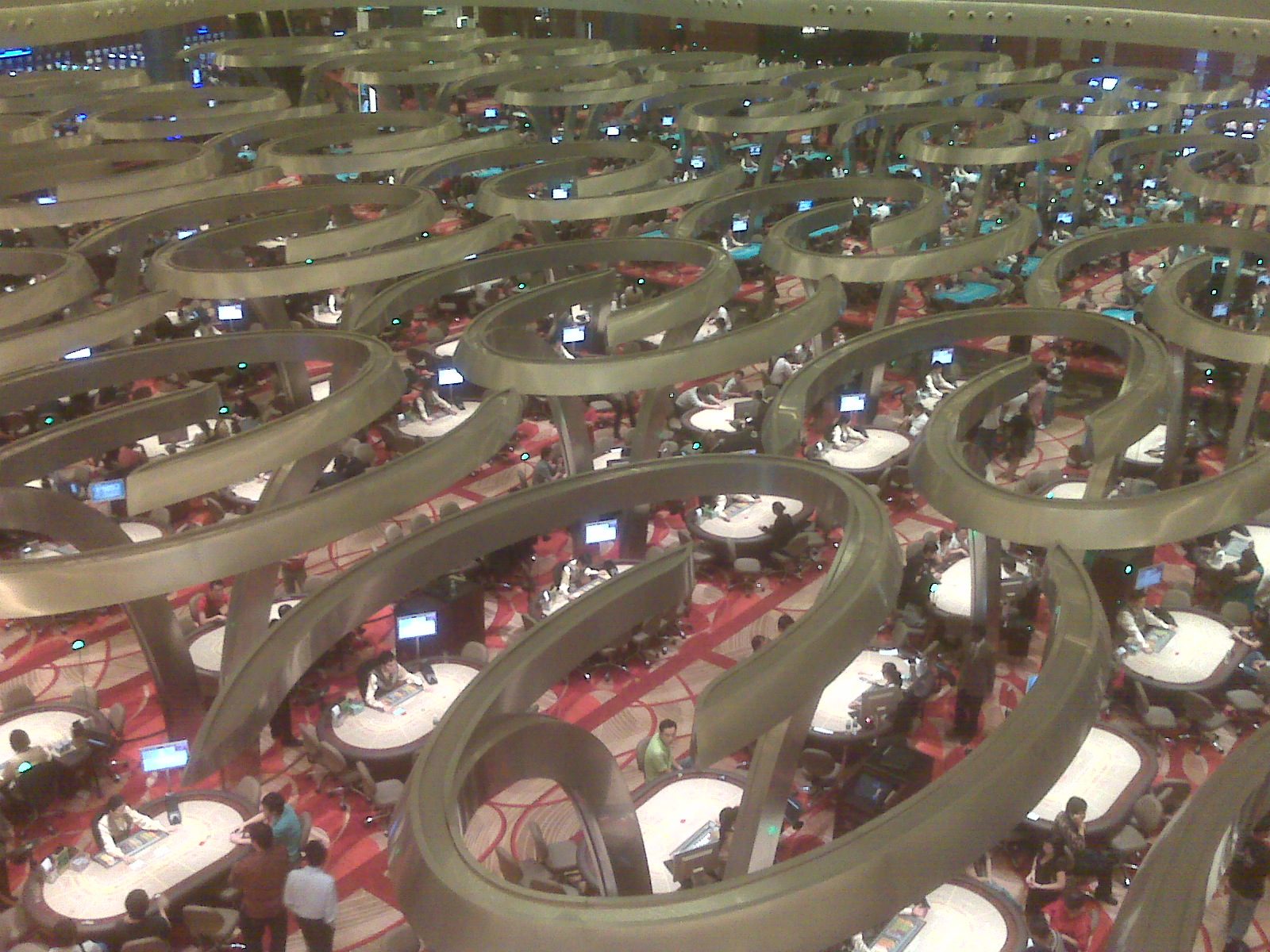
Baccarat is the largest game in the world by money staked and the smallest by decisions required. In the form played almost everywhere — punto banco — nobody chooses anything. The cards are dealt according to a fixed tableau, the third card is drawn or not drawn by rule, and the only act the player performs is picking which of three boxes to put a chip in.
Two of those boxes are among the best-priced bets in the casino. The third is one of the worst. That is the entire strategic content of the game, and it is worth knowing before sitting down.
How a hand works
Two hands are dealt, called Player and Banker. Neither belongs to anyone; they are simply labels on the layout. Tens and face cards count zero, aces count one, everything else counts its face value, and only the last digit of the total matters — a 7 and an 8 make 15, which is a five.
A total of 8 or 9 on the first two cards is a natural and ends the hand. Otherwise the drawing rules apply, in this order:
- Player draws a third card on a total of 0 to 5 and stands on 6 or 7.
- Banker stands on 7. On 6 it draws only if the Player’s third card was a 6 or 7. On 5 it draws if that card was 4 to 7. On 4, if it was 2 to 7. On 3, it draws unless that card was an 8. On 0 to 2 it always draws.
Read that list again and notice what it is doing. The Banker acts after seeing the Player’s third card, and its rules exploit that information. That positional advantage is why the Banker hand wins more often than the Player hand, and it is the reason for the commission.
The three bets, priced
| Bet | Probability of winning | Payout | House edge |
|---|---|---|---|
| Banker | 45.86% | 1 to 1 less 5% | 1.06% |
| Player | 44.62% | 1 to 1 | 1.24% |
| Tie | 9.52% | 8 to 1 | 14.36% |
Outcome probabilities and house edge from the Wizard of Odds baccarat basics page. Ties are a push on Banker and Player bets, so the effective win rates for those two are higher than the raw percentages suggest.
14.36%
House edge on the tie bet at 8 to 1 — more than thirteen times the cost of the banker bet at the same table
Wizard of Odds, baccarat basics
The commission is not a penalty
Winning Banker bets pay 19 to 20 — even money less a 5% commission. Players routinely treat this as a tax that makes the Banker bet worse, and the arithmetic says the opposite. Even after the deduction, Banker costs 1.06% against Player’s 1.24%. The commission does not make Banker bad; it stops Banker from being too good.
Without it, the house would be paying even money on a hand that wins more often than it loses, and the bet would carry a positive expectation for the player. The 5% exists to claw that back and leave a small margin. This is a rare case where the visible charge is the reason the bet is worth taking rather than a reason to avoid it.
The tie bet, and the arithmetic of an 8 to 1 payout
Ties occur about 9.52% of the time, which is roughly once in ten and a half hands. A fair payout at that frequency would be about 9.5 to 1. Most casinos pay 8 to 1, and the gap between those two numbers is the 14.36% house edge — a figure comparable to keno and worse than every proposition bet on a craps layout except the Any Seven.
Where a house pays 9 to 1, which Wikipedia notes is the standard in the United Kingdom, the edge falls to about 4.85%. Still the worst bet on the table by a factor of four, but no longer in the same category. One number of difference in a payout has cut the price by two-thirds.
Systems, roads, and the scoreboards
Every baccarat pit displays scoreboards — the big road, the bead plate, the derived roads — tracking which side has won each hand and building elaborate visual patterns from the sequence. Players study these intently, and entire betting systems are built on reading them.
Each hand is dealt from a freshly shuffled shoe of eight decks and the outcome of the previous hand does not measurably affect the next. The roads are a record of what happened. They are not a forecast, and a casino that spends money installing large screens to display them is not doing so out of a commitment to transparency. This is the gambler’s fallacy with infrastructure.
Where the game came from
Baccarat’s origins are genuinely disputed. One account has it arriving in France from Italy at the end of the fifteenth century with soldiers returning from the Italian Wars; others place it firmly in the nineteenth. What is better documented is the modern form: punto banco, the house-banked version played today, developed in Havana in the 1940s and spread from there to become the dominant form worldwide.
The whole strategy, in one line
Bet Banker. Accept the commission. Do not bet the tie. There is nothing else to decide, which is either the great virtue of baccarat or its great tedium, depending entirely on what you came for.