Every Craps Bet, Ranked by What It Costs You
The busiest layout on the floor holds bets that cost 1.36% and bets that cost 16.67%, side by side, in the same colour of felt.
· 9 min read
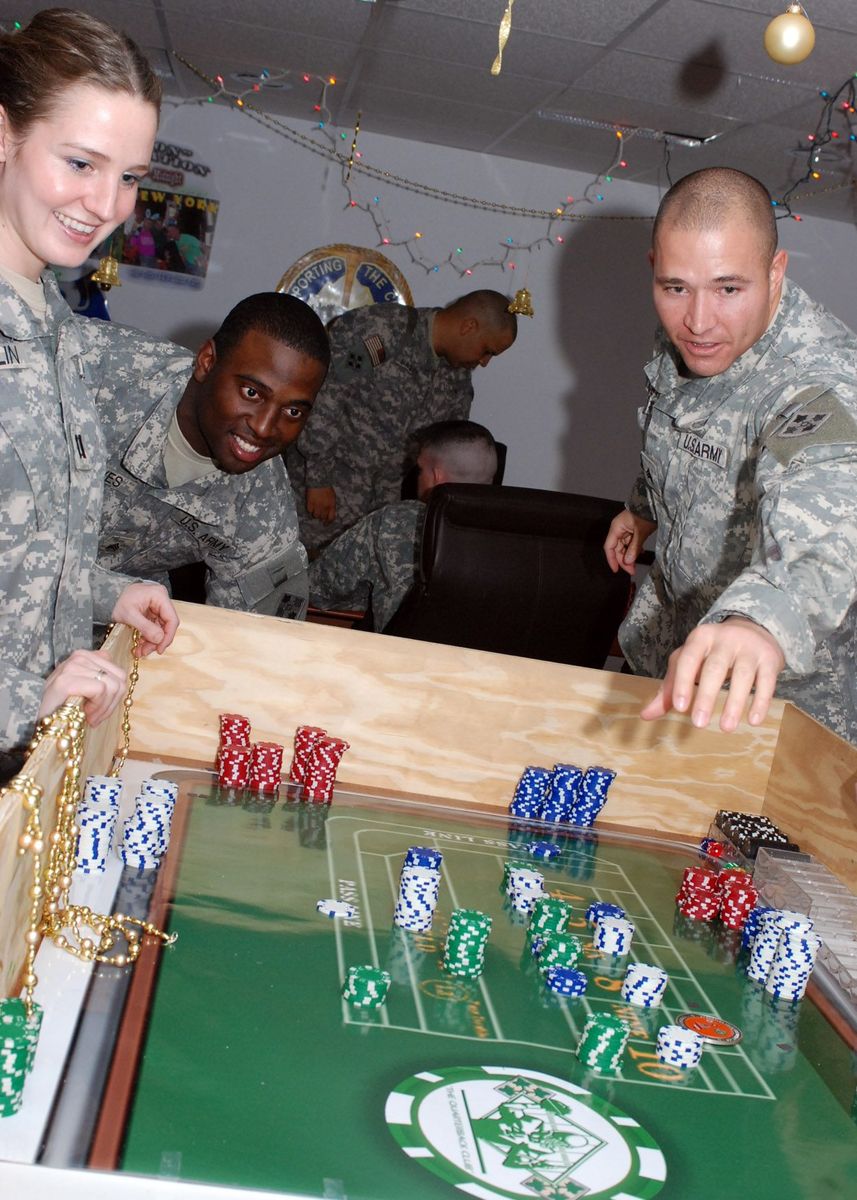
A craps layout is the most confusing surface in a casino and the most honest one. Everything on it is priced, the prices differ by more than an order of magnitude, and the cheapest bet available anywhere in the building sits about four inches from one of the most expensive. Neither is labelled.
The line bets: the two cheap ones
The pass line wins immediately on a 7 or 11, loses immediately on 2, 3 or 12, and otherwise establishes a point that must be repeated before a 7 arrives. It resolves at a house edge of about 1.41%. The don’t pass line is its mirror image and resolves at about 1.36% — very slightly cheaper, because the 12 is barred rather than paid, which costs the house less than it costs you.
Everything else on the table is a departure from these two, and almost every departure is more expensive.
The free odds bet, which costs nothing at all
Once a point is established, you may back the line bet with an additional wager paid at true odds: 2 to 1 on a 4 or 10, 3 to 2 on a 5 or 9, and 6 to 5 on a 6 or 8. Those are the exact probabilities. There is no margin. The house edge on the free odds bet is 0.000%.
0.000%
House edge on the free odds bet behind an established point — the only wager on a casino floor with no margin at all
Wizard of Odds, craps appendix 1
A casino offers this because you cannot take it on its own. It is only available behind a line bet that does carry an edge, so the effect is to dilute rather than eliminate: a $10 pass line with $30 of odds behind it puts $40 at risk against the same 1.41% charged on $10. Expressed against the total amount wagered, the combined edge falls to roughly 0.35%.
This is why the free odds bet is the standard advice for anyone playing craps at all. Not because it wins — it does not, on average — but because it is the only mechanism available for buying more action without buying more margin.
Every bet, ranked
| Bet | Payout | Edge per bet resolved |
|---|---|---|
| Free odds behind the line | True odds | 0.00% |
| Don’t pass / don’t come | 1 to 1 | 1.36% |
| Pass / come | 1 to 1 | 1.41% |
| Place 6 or 8 | 7 to 6 | 1.52% |
| Lay 4 or 10 | 1 to 2 less commission | 2.44% |
| Lay 5 or 9 | 2 to 3 less commission | 3.23% |
| Place 5 or 9 | 7 to 5 | 4.00% |
| Lay 6 or 8 | 5 to 6 less commission | 4.00% |
| Buy 4, 5, 6, 8, 9 or 10 | True odds less 5% | 4.76% |
| Place 4 or 10 | 9 to 5 | 6.67% |
| Big 6 / Big 8 | 1 to 1 | 9.09% |
| Hard 6 / Hard 8 | 9 to 1 | 9.09% |
| Any craps | 7 to 1 | 11.11% |
| Hard 4 / Hard 10 | 7 to 1 | 11.11% |
| Any seven | 4 to 1 | 16.67% |
House edge per bet resolved, from the Wizard of Odds craps appendix 1. Commission-based bets assume the standard 5% vigorish. Field and proposition payouts vary between houses; check the layout.
The two ends of that table are the point of the game. Betting the don’t pass and backing it with odds is a materially different transaction from betting the Any Seven, and the difference is a factor of twelve on every dollar.
Per bet or per roll: the number that gets misquoted
Craps house edges are published two ways and the two look nothing alike. Per bet resolved divides expected loss by the wager, which is how every other game is quoted. Per roll divides it by the wager multiplied by the average number of dice rolls the bet survives, which lets you compare a bet that resolves instantly against one that sits on the table for several minutes.
| Bet | Per bet resolved | Per roll |
|---|---|---|
| Pass / come | 1.41% | 0.42% |
| Don’t pass / don’t come | 1.36% | 0.40% |
| Place 6 or 8 | 1.52% | 0.46% |
| Place 5 or 9 | 4.00% | 1.11% |
| Place 4 or 10 | 6.67% | 1.67% |
| Any craps | 11.11% | 11.11% |
| Any seven | 16.67% | 16.67% |
Per-roll figures from the Wizard of Odds craps basics page; per-bet figures from appendix 1. One-roll propositions have identical figures in both columns because they resolve on the next throw by definition.
Watch what happens to the place bets. Quoted per bet, placing the 4 costs 6.67% and looks catastrophic next to the pass line’s 1.41%. Quoted per roll it costs 1.67% against 0.42% — still four times as much, but the ratio is the honest comparison, because a place bet on the 4 sits there through many rolls before resolving.
What the field bet is actually offering
The field looks generous: it wins on 2, 3, 4, 9, 10, 11 and 12, which is seven numbers out of eleven. The numbers it loses on — 5, 6, 7 and 8 — are the four most likely, and they cover 20 of the 36 dice combinations against the field’s 16. With the 12 paying 2 to 1 the edge is 5.56%; where a house pays 3 to 1 on the 12 it drops to 2.78%. Same bet, same layout, half the price, and the difference is one line of small print.
The short version
Pass or don’t pass, backed with as much free odds as the house allows, is the cheapest way to play craps and it is not close. Place the 6 and 8 if you want more numbers working. Do not bet into the centre of the table. The game is unusually good at rewarding a player who reads the price list, because the price list has a range wider than any other game in the room.