The Wheel Owes You Nothing: Independence and the Gambler’s Fallacy
Red has come up eight times. The ninth spin has not noticed, does not care, and is priced exactly as the first one was.
· 6 min read
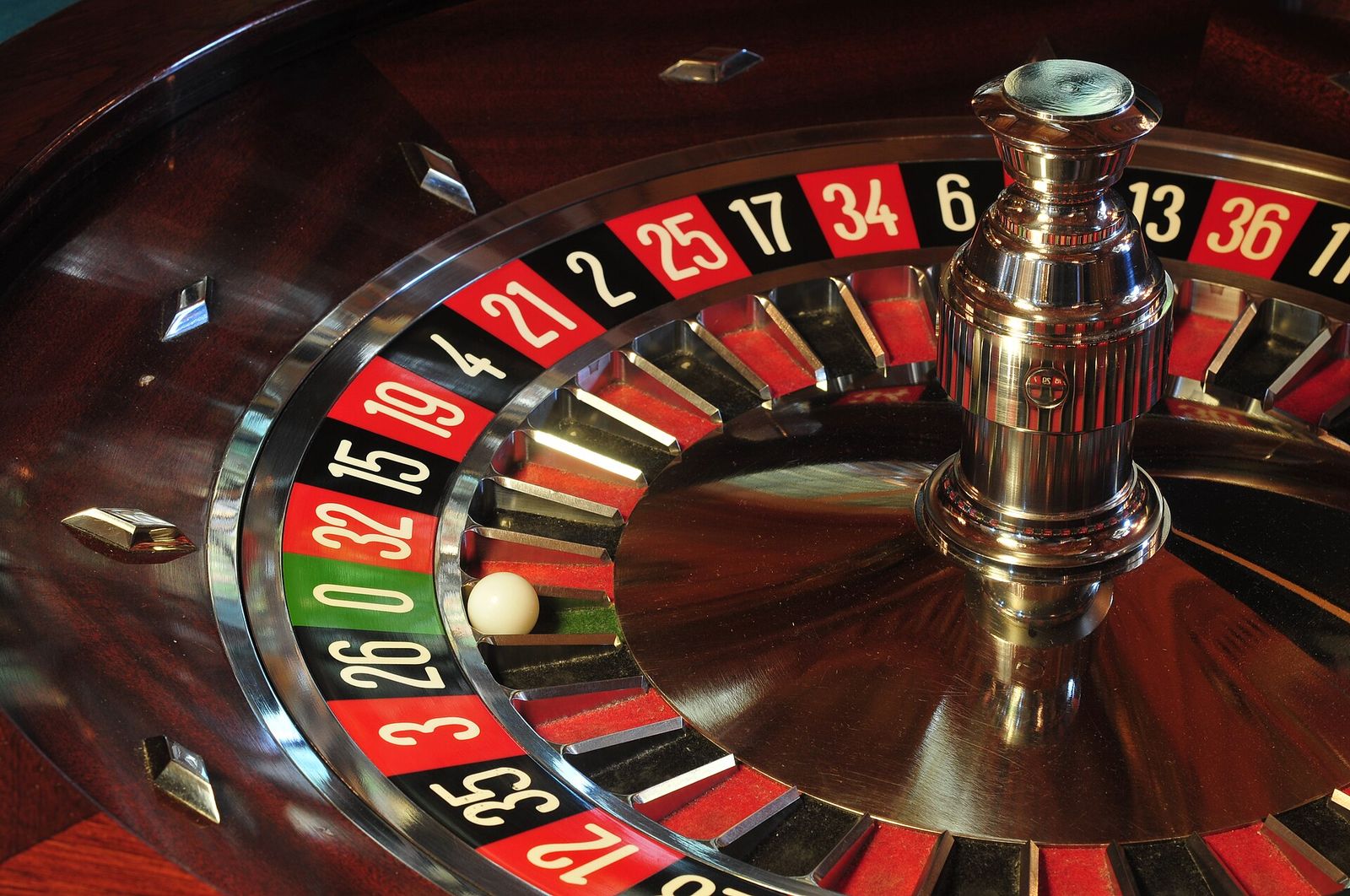
A roulette wheel is a lump of wood, metal and Teflon. It has no ledger, no short-term memory and no sense of fairness. Every spin it makes is the first spin it has ever made, and this is not a metaphor — it is a physical description.
The gambler’s fallacy is the belief that a run of one outcome makes the opposite outcome more likely. Eight reds, therefore black is due. It is the most durable wrong idea in gambling, it has been given the name of an entire casino because of one famous night at Monte Carlo, and it survives because the intuition behind it is not stupid. It is simply applied to the wrong object.
Independence, precisely
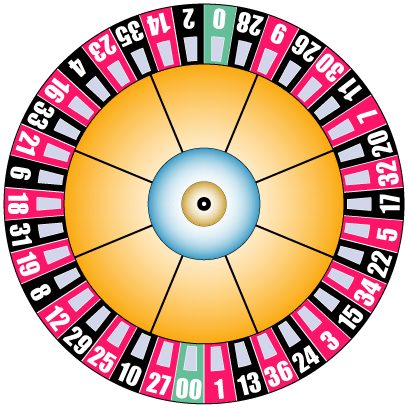
Two events are independent when knowing the outcome of one tells you nothing about the probability of the other. On a single-zero wheel, red covers 18 of 37 pockets, so red arrives with probability 18/37 ≈ 48.6% on every spin, unconditionally. Eight consecutive reds is an unusual thing to have happened. It is not information about the ninth spin, because the ninth spin is not connected to the previous eight by anything at all.
48.6%
Probability of red on a single-zero wheel — on the first spin, on the ninth, and on the spin after eight consecutive reds
Wikipedia, Roulette: 18 red pockets of 37
The arithmetic that misleads people is real, and it looks like this: the chance of nine reds in a row, stated in advance, is (18/37)⁹ ≈ 0.19%. Genuinely rare. But that is the probability of a nine-spin sequence before any of it has happened. Once eight reds are on the board, eight of those nine coin flips have resolved. The only thing left is one spin, at 48.6%. The rarity was consumed by the past.
The Monte Carlo night
The fallacy’s other name comes from the Monte Carlo Casino, where black is said to have come up a very long run of times on a single evening in 1913, and players lost enormous sums betting ever larger amounts on red in the certainty that the correction was overdue. Whether the details of the story survive scrutiny or not, the structure of the mistake is exact: the run was treated as a debt the wheel had incurred.
Wheels do not incur debts. If they did, they would be beatable, and the entire economics of a casino floor would collapse.
The regulator’s version of the same point
Online, the wheel is a random number generator, and the independence is written into law. The Gambling Commission’s technical standards require that results be “acceptably random” and state plainly that “adaptive behaviour (that is, a compensated game) is not permitted”. The standards go further and forbid re-seeding that introduces predictability, and require that two instances of a generator never synchronise.
Read that from the player’s side and it says something useful: a licensed game is prohibited from noticing that you are losing. It cannot tighten because you are ahead or loosen because you are behind. The absence of memory is not an accident of the machine, it is a licensing condition.
The mirror-image mistake
The same error runs in reverse, and on slot floors it is more common. The hot-hand belief says a machine that has been paying will keep paying, or that a machine that has not paid all evening is “due”. Both are the gambler’s fallacy with the sign flipped, and both are contradicted by the same certified generator. A reel game selects a number and maps it to an outcome; it has no state, no run history and no view about how long you have been sitting there.
Where the intuition does belong
Human beings are not badly designed for this. In most of the world, streaks genuinely are informative. A machine that has jammed four times today probably will jam again. A player who has made six good decisions probably knows something. Almost every process we deal with has memory, so the instinct to read a run as a signal is usually correct.
Casino games are engineered to be the rare exception, and the engineering is audited. The instinct is not the problem. The problem is that the one place it does not apply is also the one place where acting on it costs money — 2.70% of everything you stake on a single-zero wheel, and 5.26% on a double-zero one, regardless of how convinced you are that black is due.