House Edge, Explained: What the Casino Keeps and Why
Every bet on a casino floor has a published price. It is expressed as a percentage of turnover, it ranges from half a percent to sixteen, and almost nobody checks it before sitting down.
· 8 min read
A casino is not a place where you might win money. It is a business with a published price list, and the price of each product is stated as a percentage of what you put through it. That percentage is the house edge, and it is the single most useful number on the floor.
Nothing about it is hidden. In Great Britain a licensed operator is required to make it available: the Gambling Commission’s technical standards say that before a customer commits to gamble, they must be able to find “the house edge (or margin)”, the return to player percentage, or the probability of the winning events occurring. Most players never look.
What the number actually measures
House edge is the casino’s expected profit expressed as a share of the amount wagered. A 5.26% edge means that for every $100 staked, the operator expects to keep $5.26 on average over a very large number of trials. It says nothing about any single bet, and it is not a prediction about your evening.
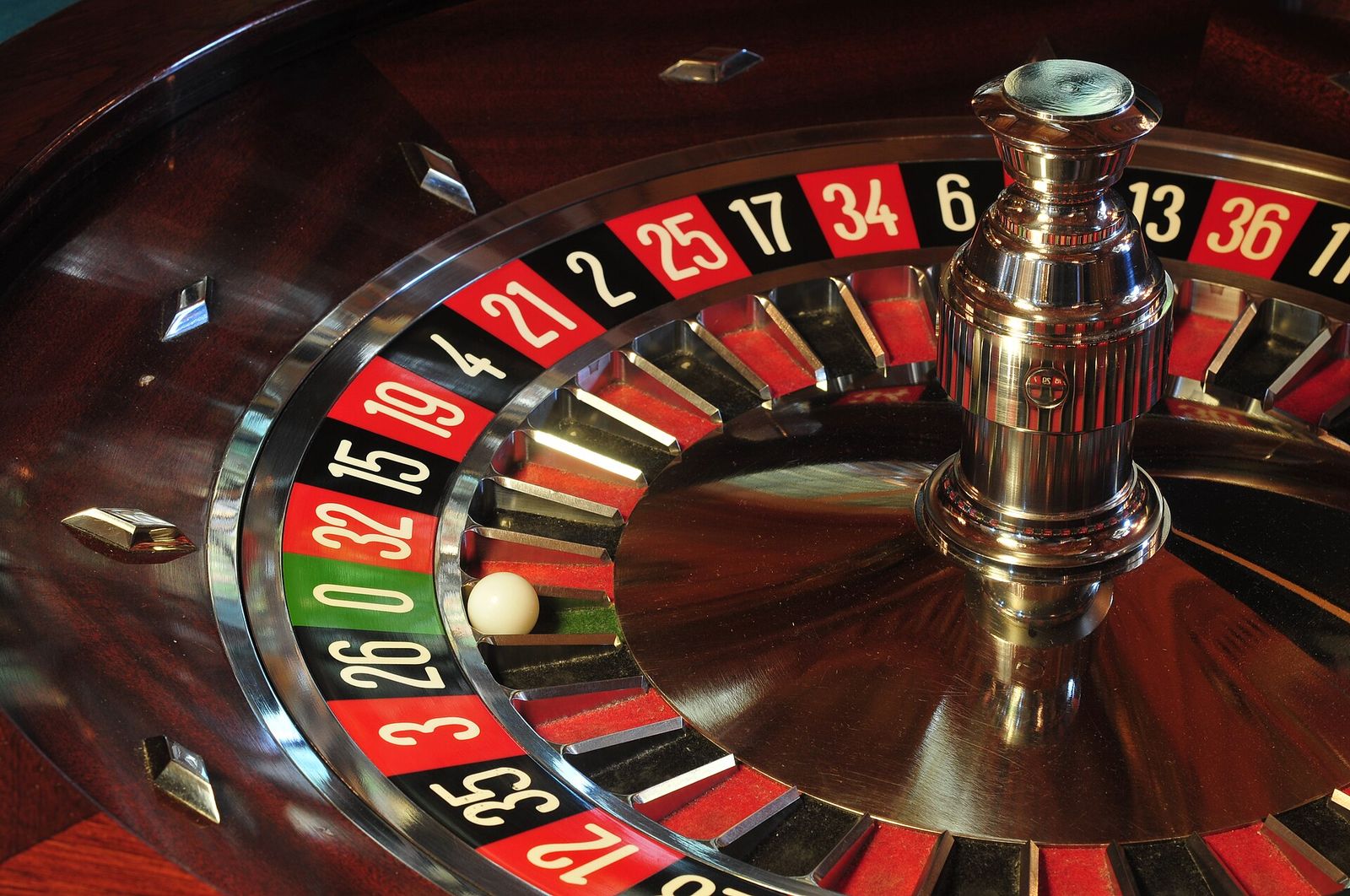
The arithmetic is unromantic. On an American roulette wheel there are 38 pockets. A straight-up number pays 35 to 1. If it were a fair game it would pay 37 to 1. The two missing units, spread across 38 outcomes, are the entire business model:
(1/38 × +35) + (37/38 × −1) = −0.0526
5.26%
House edge on every bet on a double-zero roulette wheel except the five-number bet, which costs 7.89%
Wizard of Odds, house-edge tables; Wikipedia, Roulette
The published price of every major bet
These are theoretical figures for optimal play, drawn from the Wizard of Odds house-edge tables. Where a game admits decisions — blackjack above all — the edge assumes the player makes the cheapest one every time. Play worse and the number goes up.
| Game / bet | House edge |
|---|---|
| Blackjack (liberal Las Vegas rules, basic strategy) | 0.28% |
| Video poker (full-pay Jacks or Better, optimal play) | 0.46% |
| Craps — don’t pass / don’t come | 1.36% |
| Craps — pass / come | 1.41% |
| Craps — place 6 or 8 | 1.52% |
| Baccarat — banker | 1.06% |
| Baccarat — player | 1.24% |
| Roulette — single zero (37 pockets) | 2.70% |
| Roulette — double zero (38 pockets) | 5.26% |
| Slot machines (typical range) | 2%–15% |
| Big Six wheel — $1 bet | 11.11% |
| Baccarat — tie (8 to 1) | 14.36% |
| Craps — Any Seven | 16.67% |
| Big Six wheel — joker / logo | 24.07% |
| Keno (typical range) | 25%–29% |
Theoretical house edge as a percentage of the initial wager, from the Wizard of Odds house-edge comparison. Blackjack and video poker figures assume optimal play; slot and keno ranges vary by machine and paytable.
The spread is the point. The best and worst bets available in the same room, often on the same table, differ by a factor of sixty. A player who moves from the Any Seven to the don’t pass line has not become lucky. They have stopped paying twelve times as much for the same entertainment.
Edge per bet is not cost per hour
This is where the number is most often misread. House edge is charged per wager, so the amount it costs you depends on how many wagers you make. A game with a low edge played very fast can be more expensive than a game with a high edge played slowly.
| Game | Stake | Decisions/hour | Edge | Expected loss |
|---|---|---|---|---|
| Blackjack, basic strategy | $10 | 70 | 0.5% | $3.50 |
| Baccarat, banker | $10 | 60 | 1.06% | $6.36 |
| Roulette, single zero | $10 | 40 | 2.70% | $10.80 |
| Roulette, double zero | $10 | 40 | 5.26% | $21.04 |
| Online slot, 96% RTP | $1 | 600 | 4.00% | $24.00 |
| Craps, Any Seven | $10 | 30 | 16.67% | $50.01 |
Expected loss = stake × decisions × edge. Decision rates are illustrative; the stake, edge and arithmetic are not. Actual results vary widely around these averages — see our piece on variance.
The slot line is the one worth staring at. A 96% return-to-player slot has a 4% edge, which sounds far better than double-zero roulette. But a reel game resolves in a couple of seconds and a roulette table resolves in ninety, so the slot puts six hundred decisions through the 4% while the wheel puts forty through the 5.26%. The lower-edge game costs more per hour.
Element of risk, and why blackjack’s number is slippery
Some games let you increase your wager after the deal — doubling down, splitting, taking odds behind the line. Quoting the edge against the initial bet then understates what is actually at risk. Analysts handle this with a second figure, the element of risk, which divides expected loss by the average total amount wagered rather than by the opening stake. For most games the two are identical; for blackjack, Caribbean stud and craps with odds they are not, and the element of risk is the fairer comparison.
What the number will not do for you
House edge is a long-run average and the long run is longer than an evening. Over a hundred hands of blackjack the 0.5% edge is completely swamped by variance; you will finish up or down by an amount that has almost nothing to do with it. Over a hundred thousand hands it is the only thing that matters. Every casino in the world is playing the hundred-thousand-hand game, and every recreational player is playing the hundred-hand one.
Knowing the edge does not turn a losing proposition into a winning one. There is no bet on a casino floor with a positive expectation for the player, and no arrangement of negative bets adds up to a positive one. What the number does is tell you the price. Whether that price is worth paying for the entertainment is a separate question, and an entirely reasonable one to answer with yes — as long as it is answered with the real figure in view.