Bankroll Arithmetic: Why Bet Size Decides More Than Game Choice
Two players with the same edge and the same bankroll can have wildly different odds of still being solvent in a year. The difference is how much they put on each hand.
· 8 min read
Two people walk into the same casino with the same $1,000 and play the same game at the same edge. One bets $10 a hand and one bets $200. After four hours the first is probably still playing and the second is probably not. Nothing about the game changed between them. The only variable was stake size, and stake size is the variable almost nobody thinks about.
Ruin is a function of bet size, not of luck
The classical result is called gambler’s ruin, and its conclusion is blunt: a player with finite money betting against an opponent with effectively infinite money, at a negative expectation, goes broke with probability approaching 1 if they play long enough. The casino is that opponent. The only question the arithmetic leaves open is how long, and the answer is governed by how big each bet is relative to the bankroll.
The intuition is simple enough without the algebra. Your bankroll can absorb a certain number of consecutive losses. Divide bankroll by stake and you have that number directly. A $1,000 bankroll at $10 a hand survives a hundred straight losses, which will never happen. At $200 a hand it survives five, which happens regularly.
5 hands
What a $1,000 bankroll survives at $200 a hand. At $10 a hand it survives 100 — the same money, the same game, a twentyfold difference in exposure
Variance is the number that describes an evening
Expected value tells you the average outcome. Variance tells you how far from that average a session is likely to stray, and over a few hundred trials it dominates completely.
Roughly, the spread of results after n bets grows with the square root of n, while the expected loss grows with n itself. Early on, the square root is much bigger than the linear term, which is exactly why short sessions look winnable. Play long enough and the linear term overtakes it, which is why long ones are not.
| Hands | Expected loss | Typical swing (±1 s.d.) |
|---|---|---|
| 100 | $5 | ±$114 |
| 500 | $25 | ±$255 |
| 2,000 | $100 | ±$510 |
| 10,000 | $500 | ±$1,140 |
| 100,000 | $5,000 | ±$3,606 |
Expected loss = hands × $10 × 0.5%. The swing column uses a per-hand standard deviation of 1.142 betting units, the figure the Wizard of Odds gives for liberal six-deck Strip rules, scaled by the square root of the number of hands. At 100 hands the swing is twenty times the expectation; by 100,000 hands the expectation has overtaken it.
Read the last two rows together. At ten thousand hands a good session and a bad one are still separated by more than the expected loss, so a winning player and a losing player are indistinguishable. At a hundred thousand, the expected loss is larger than the typical swing and the outcome is no longer in doubt. Casinos deal a hundred thousand hands in a week.
The Kelly criterion, and why nobody uses it at full strength
Where an edge genuinely exists — poker against weak opponents, a mispriced sports market, a card-counted shoe — the question becomes how much to stake. The Kelly criterion answers it: bet the fraction of your bankroll that maximises the long-run growth rate of that bankroll. For a bet paying b to 1 with win probability p:
f* = p − (1 − p) / b
A bet at evens with a 55% chance of winning gives f* = 0.55 − 0.45 = 0.10 — stake 10% of the bankroll. Kelly is provably optimal for growth and it is also brutally volatile: full-Kelly staking routinely halves a bankroll before it doubles it. Serious practitioners bet a fraction of it, typically a quarter or a half, accepting slower growth in exchange for a survivable ride.
A budget is not a bankroll
For recreational play the useful framing is different and much simpler. There is no edge to size, so there is no optimal stake — only a maximum acceptable cost. Decide what the evening is worth as entertainment, bring that amount, and treat it as spent on arrival.
The arithmetic that makes this concrete is the expected hourly cost: stake × decisions per hour × house edge. It converts an abstract percentage into a number you can compare against a cinema ticket or a restaurant bill.
| Game | Stake | Decisions/hour | Expected cost |
|---|---|---|---|
| Blackjack, basic strategy | $5 | 70 | $1.75 |
| Blackjack, basic strategy | $25 | 70 | $8.75 |
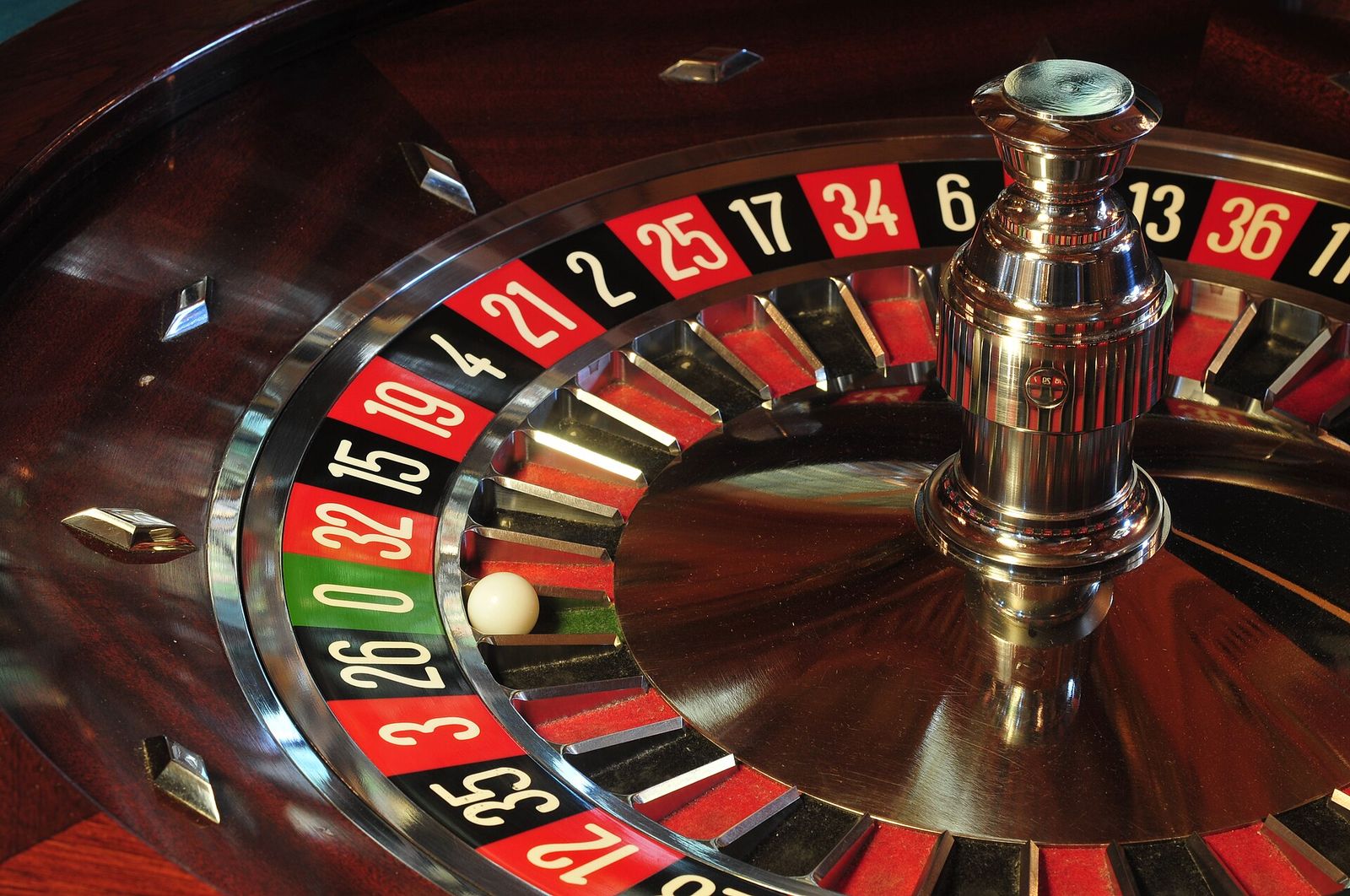
| Roulette, single zero | $10 | 40 | $10.80 |
| Roulette, double zero | $25 | 40 | $52.60 |
| Online slot, 96% RTP | $0.50 | 600 | $12.00 |
| Online slot, 96% RTP | $2.00 | 600 | $48.00 |
Expected cost = stake × decisions × house edge, using 0.5% for basic-strategy blackjack, 2.70% and 5.26% for the two roulette wheels and 4% for a 96% RTP slot. Decision rates are illustrative. Individual sessions vary enormously around these figures — that is what the variance table above is describing.
Why regulators now legislate stake size directly
The relationship between stake and harm is well enough established that Great Britain has written it into licence conditions rather than leaving it to players. Since 2025 the maximum stake per game cycle on an online slot is £5 for customers aged 25 and over, and £2 for customers aged 18 to 24. The £5 limit took effect on 9 April 2025 and the £2 limit on 21 May 2025. The cap applies to slots only — not to roulette, blackjack or other casino games.
Whatever one thinks of the policy, the reasoning is the arithmetic on this page. Six hundred spins an hour at £5 is £3,000 of turnover; the same hour at £20 would have been £12,000. The edge did not change. The exposure did, by a factor of four, and so did the speed at which a bankroll disappears.
The three rules that survive all of this
- Stake small relative to the total. Bet size sets how long you last, and how long you last is most of what determines whether an evening is enjoyable.
- Never re-size a bet in response to results. Progressive systems — Martingale above all — trade many small wins for one catastrophic loss, and table limits guarantee that the catastrophic loss eventually arrives. The expected value is unchanged; only the shape of the loss is.
- Set the limit before, not during. The decision made while losing is not made by the same person who set the budget, and this is a documented feature of how people behave under loss rather than a moral failing.
None of this makes a negative-expectation game positive. It makes it a purchase with a known, bounded price instead of an open-ended one — which is the only version of the transaction that is worth making.